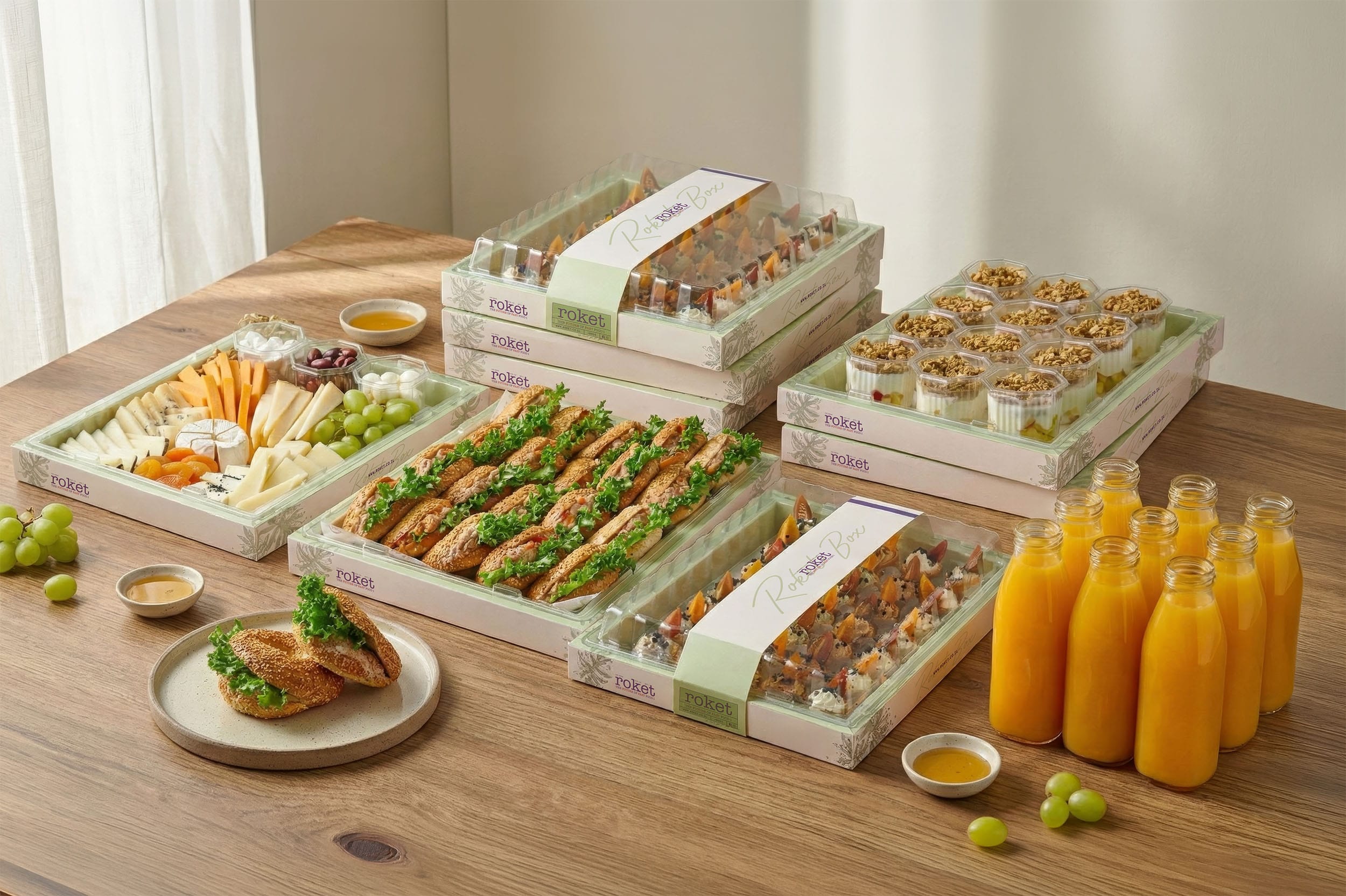
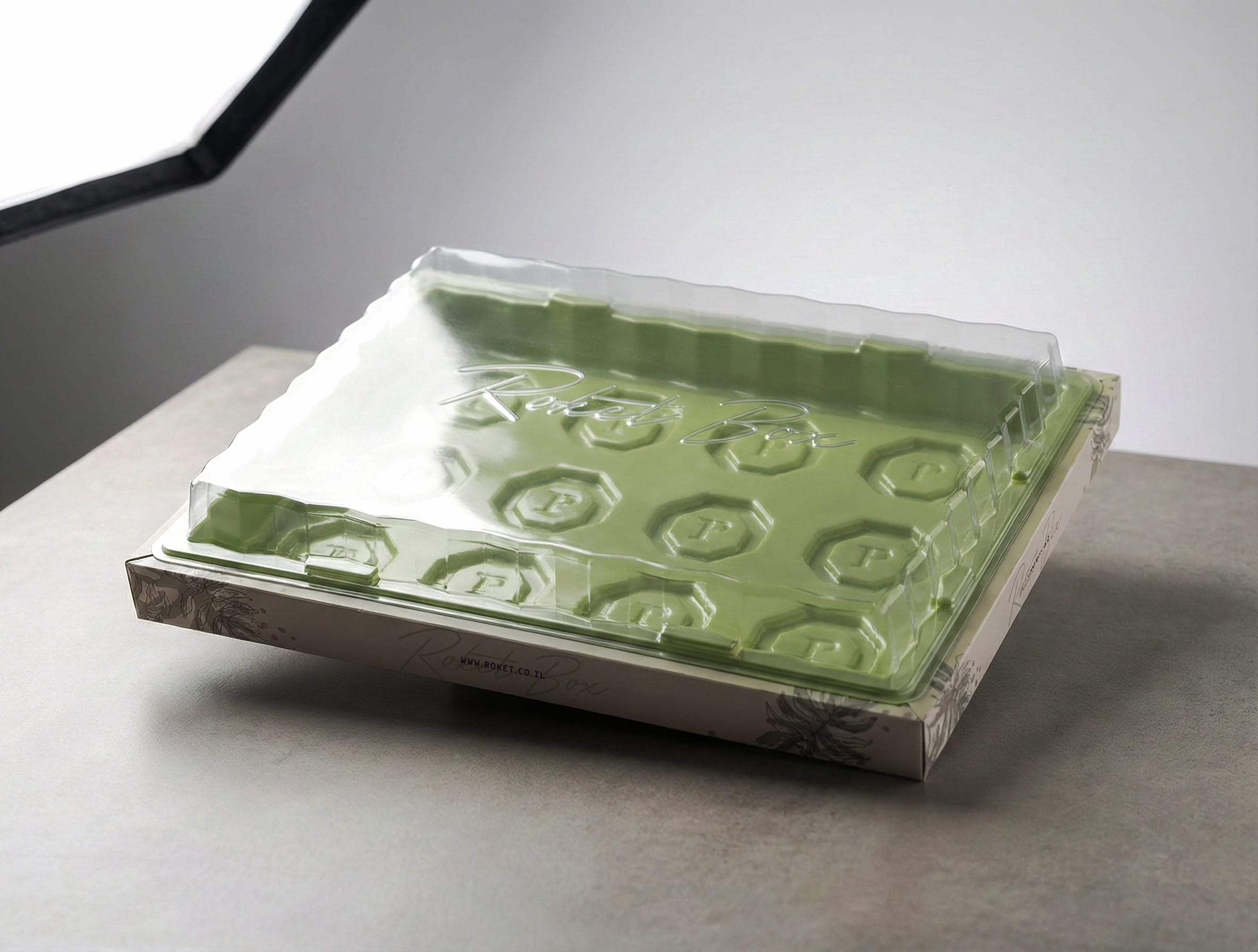
The Operational Challenge
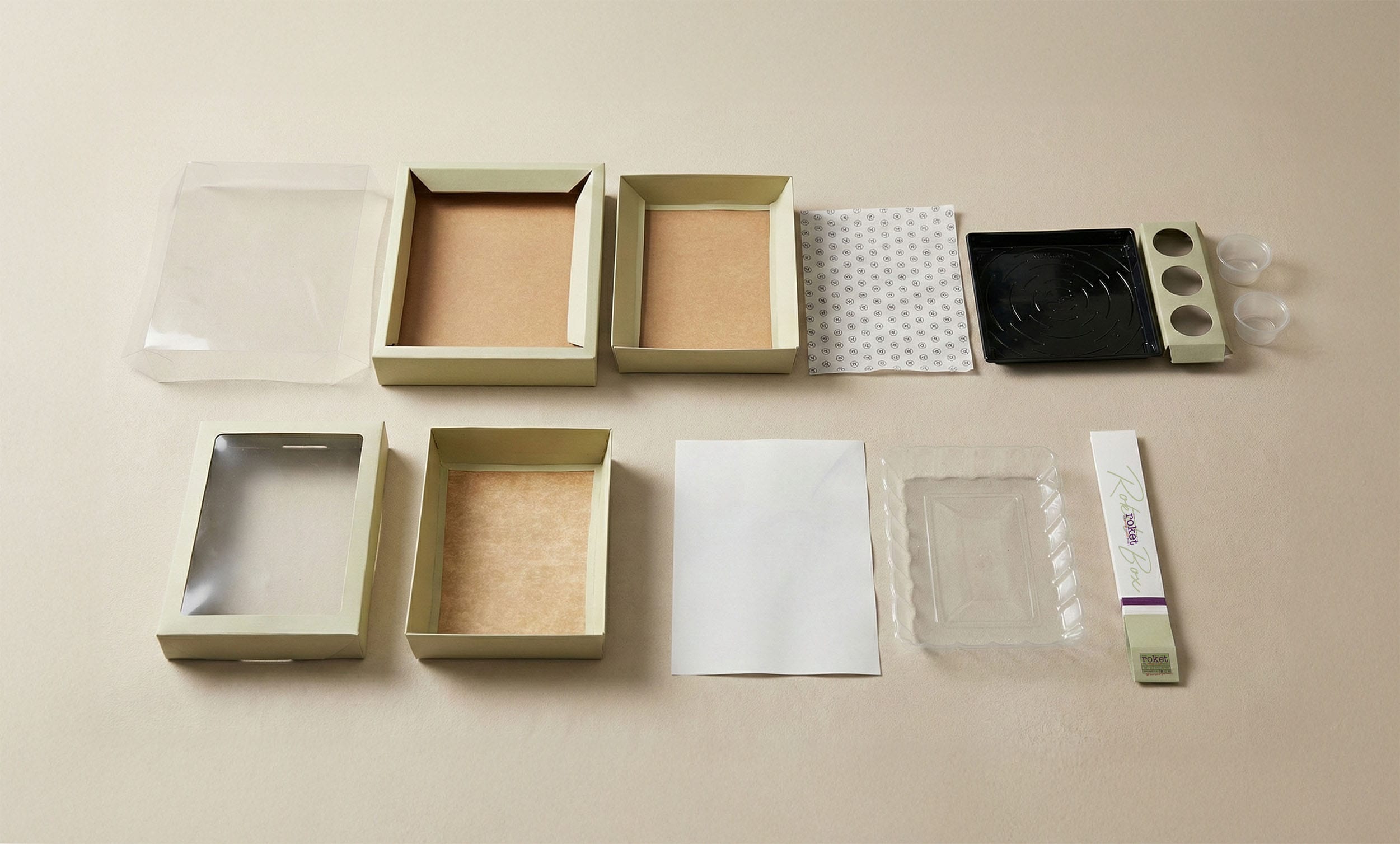
Roket’s serving trays were built from eight separate packaging elements sourced from four different suppliers. Assembly required time, coordination and end of day preparation.
Teams would stay behind to pre fold trays for the following morning. The system lacked structural consistency, stackability and scalability. Inventory management was fragmented. Storage was inefficient. Expansion was limited. The design problem was operational.

Design Strategy
The approach focused on architectural clarity.
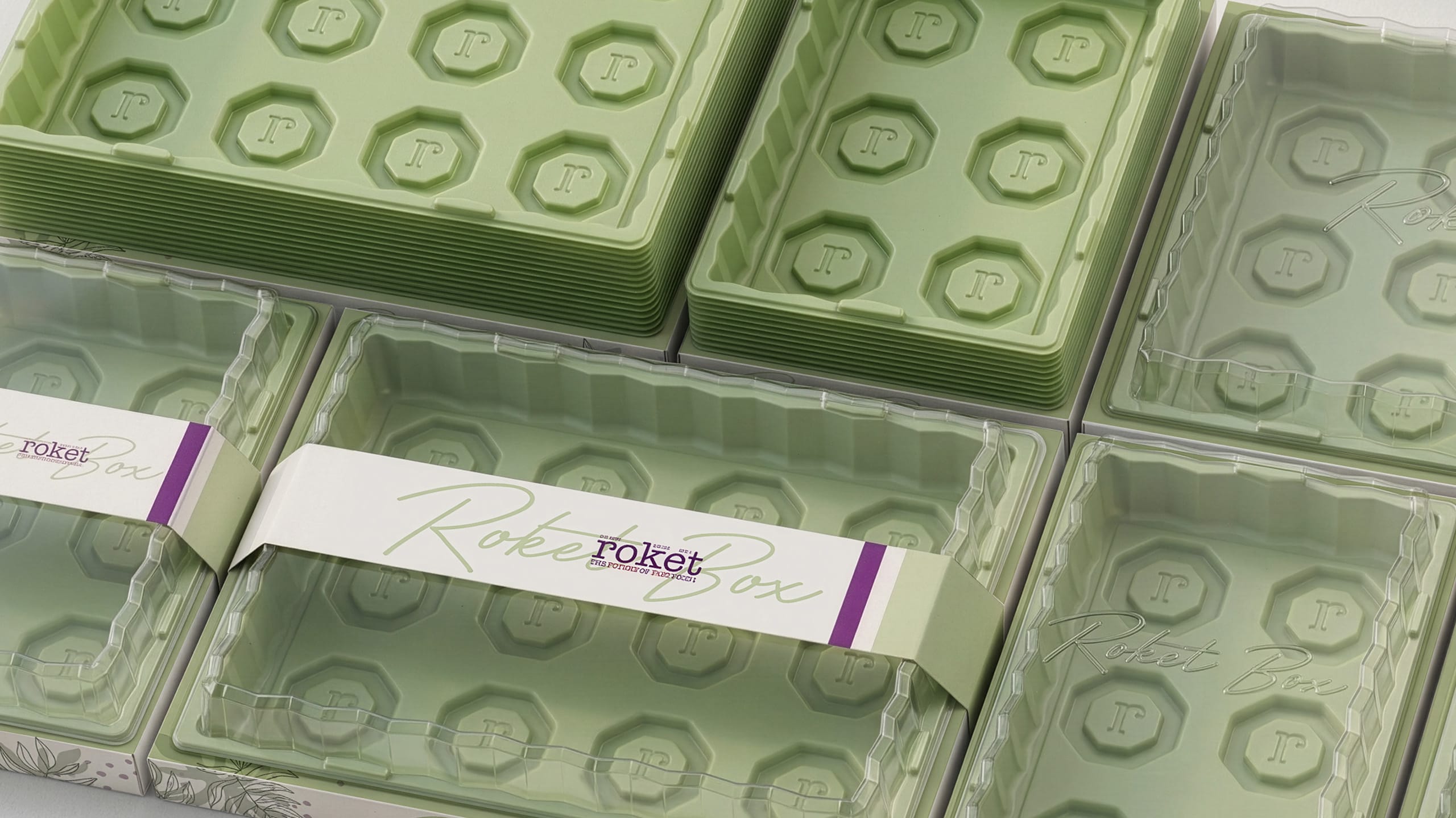
Component reduction from eight elements to five, supplier consolidation from four to two, and the development of a fully stackable geometry. The system includes a reinforced base shell for structural rigidity, a transparent rigid lid for food visibility, and a unified branded locking band.
Every decision aimed to simplify production, streamline logistics, and strengthen visual coherence.
This was not packaging decoration.
It was system design.

Operational Impact
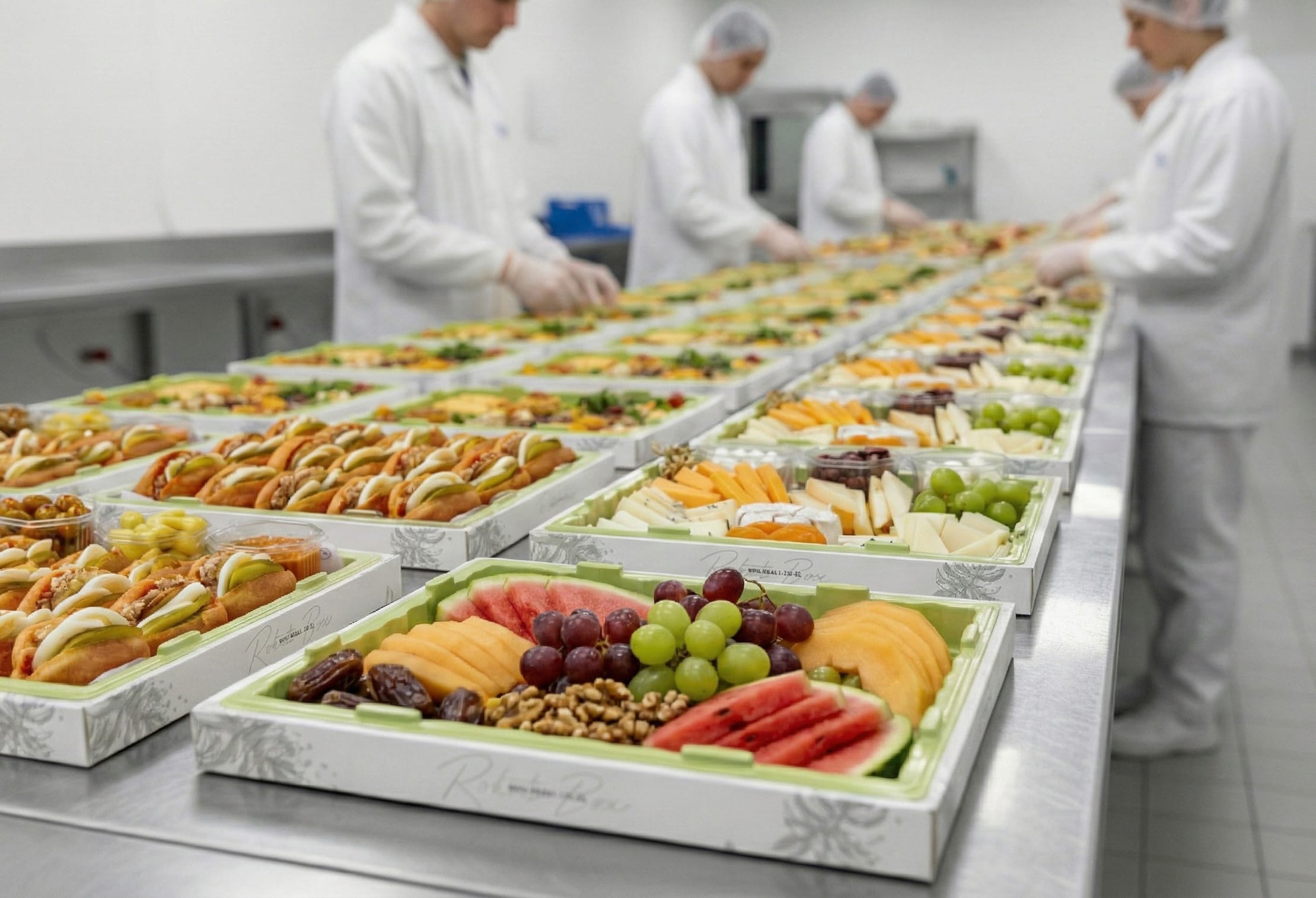
The new system delivered immediate operational results. Assembly time was significantly reduced, daily pre-folding routines were eliminated, and packaging components per configuration were reduced by 50%. Inventory control improved, storage became more efficient through full stackability, and the supplier network was consolidated.
Today, the system is in full-scale production and has been sold in hundreds of thousands of units.
Design translated directly into operational efficiency.
System Architecture
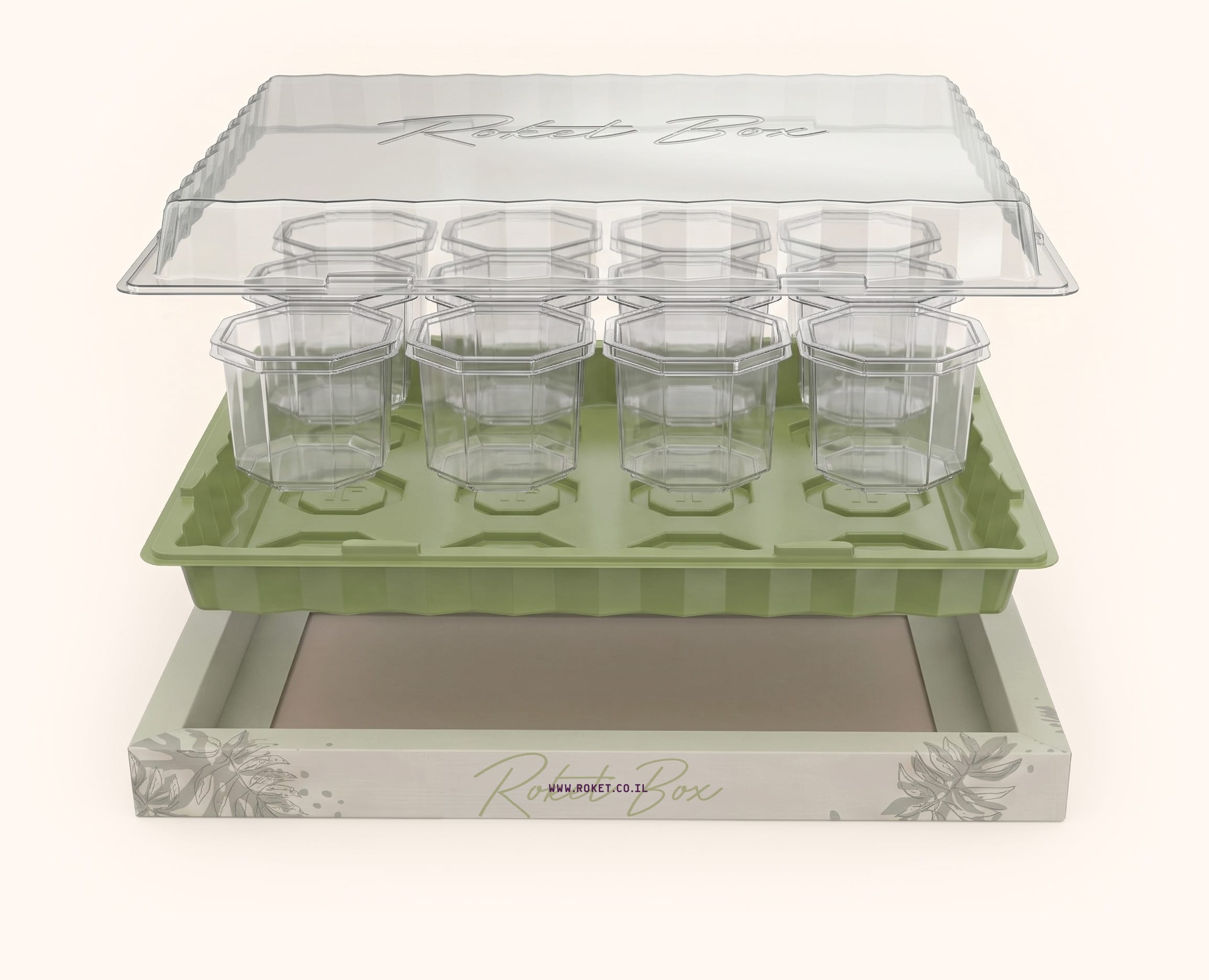
Rather than designing a serving tray, the project introduced a modular packaging platform engineered for flexibility, efficiency and scale.
A reinforced geometric base and lid maximize structural rigidity while minimizing material thickness, reducing both weight and manufacturing cost. Modular cups and inserts lock into place through geometry, preventing movement while strengthening the overall system.
Every element nests and stacks efficiently, enabling countless food configurations from a single platform.
Less material. Fewer components. Greater performance.




From System to Experience
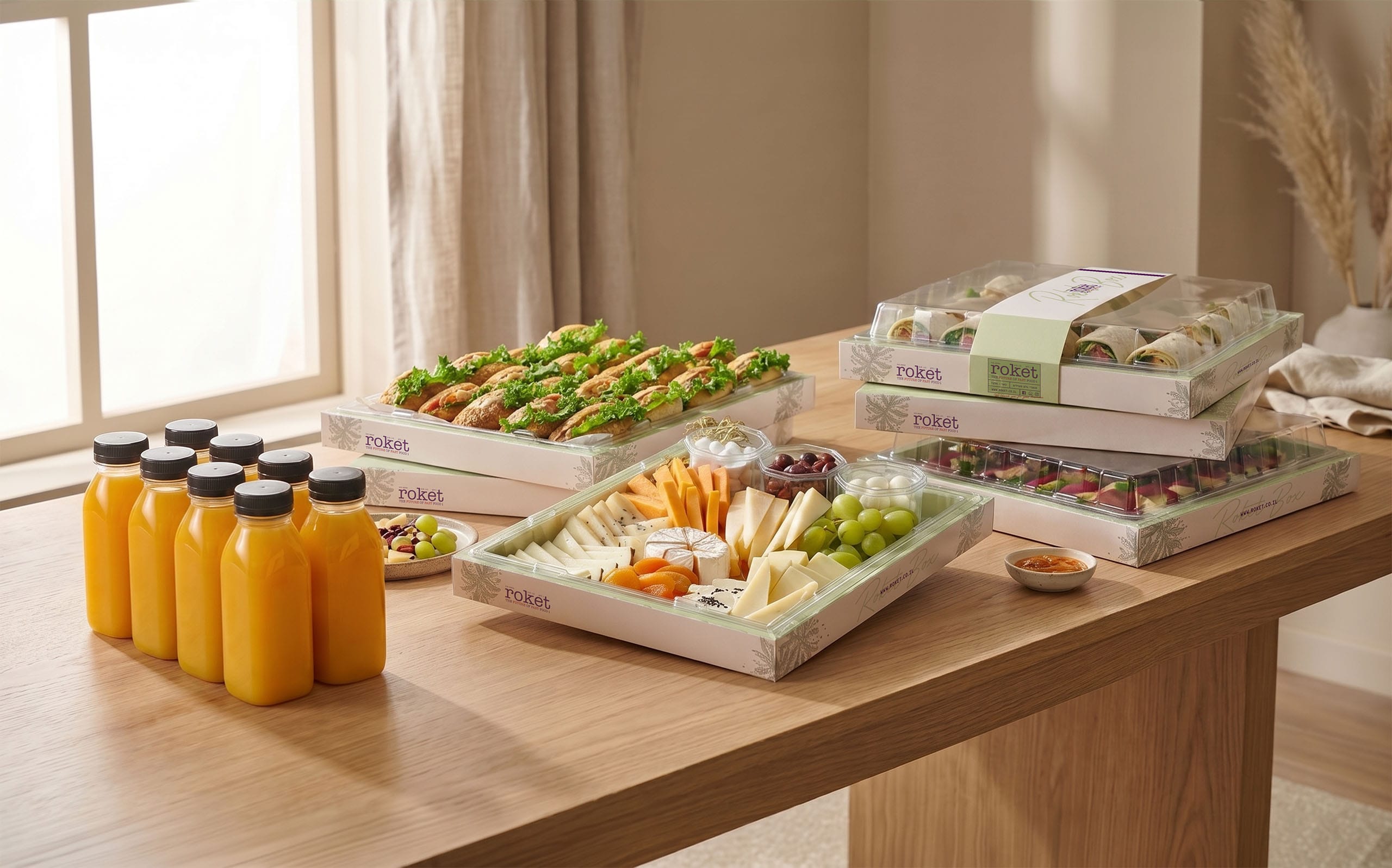
What began as an operational redesign became a better customer experience.
Today, every delivery reflects the same principles the platform was built on: simplicity, consistency and premium presentation.